ZC Miner × MakePay
Serious hardware.A clearer way to pay.
Inside ZC Miner’s MakePay checkout: connecting an ASIC miner order to payment instructions, a trackable status, and the merchant’s wallet.
Read the story
- Business
- Mining hardware & parts
- Storefront
- Shopify
- Payment experience
- MakePay checkout
A technical purchase deserves a clear final step.
ZC Miner, also known as ZhenChainMicro, sells mining machines and related parts. Its catalog spans different manufacturers, algorithms, and mining needs. The company’s published history dates to 2021, with a business focused on hardware sales and technical support.
Choosing a miner involves more than choosing a price. Buyers compare the machine, power requirements, availability, and delivery details. ZC Miner’s support page asks buyers to keep the order number alongside technical details such as the model and serial number. The payment should preserve that reference from the start. MakePay’s published ZC Miner checkout example shows how that handoff works: a Shopify order alongside a dedicated crypto payment experience.
An address alone is not an order.
A wallet transfer needs context. The buyer must know the amount, asset, and network; the seller must know which order the transfer belongs to. For a hardware purchase, those details are part of the buying experience. A payment screenshot or a copied address cannot, by itself, give both sides a shared view of payment status.
Keep checkout connected to the purchase.
The ZC Miner example brings the order and MakePay payment instructions into one journey. The buyer chooses an available payment route, follows its instructions, and can see the payment progress. MakePay maintains the payment record while supported settlement routes send the final asset to the merchant’s configured wallet.
From an order to a wallet.
The pattern shown in the published ZC Miner checkout: a specific purchase, clear instructions, and a payment record.
- 01
Confirm the order
The selected hardware and order amount provide the context for checkout.
- 02
Choose how to pay
MakePay presents available assets and networks, then the instructions for the chosen route.
- 03
Follow the payment
The payment status stays connected to the order as settlement progresses to the merchant wallet.
MakePay settlement goes to the merchant’s configured wallet. Available assets and routes depend on the payment.
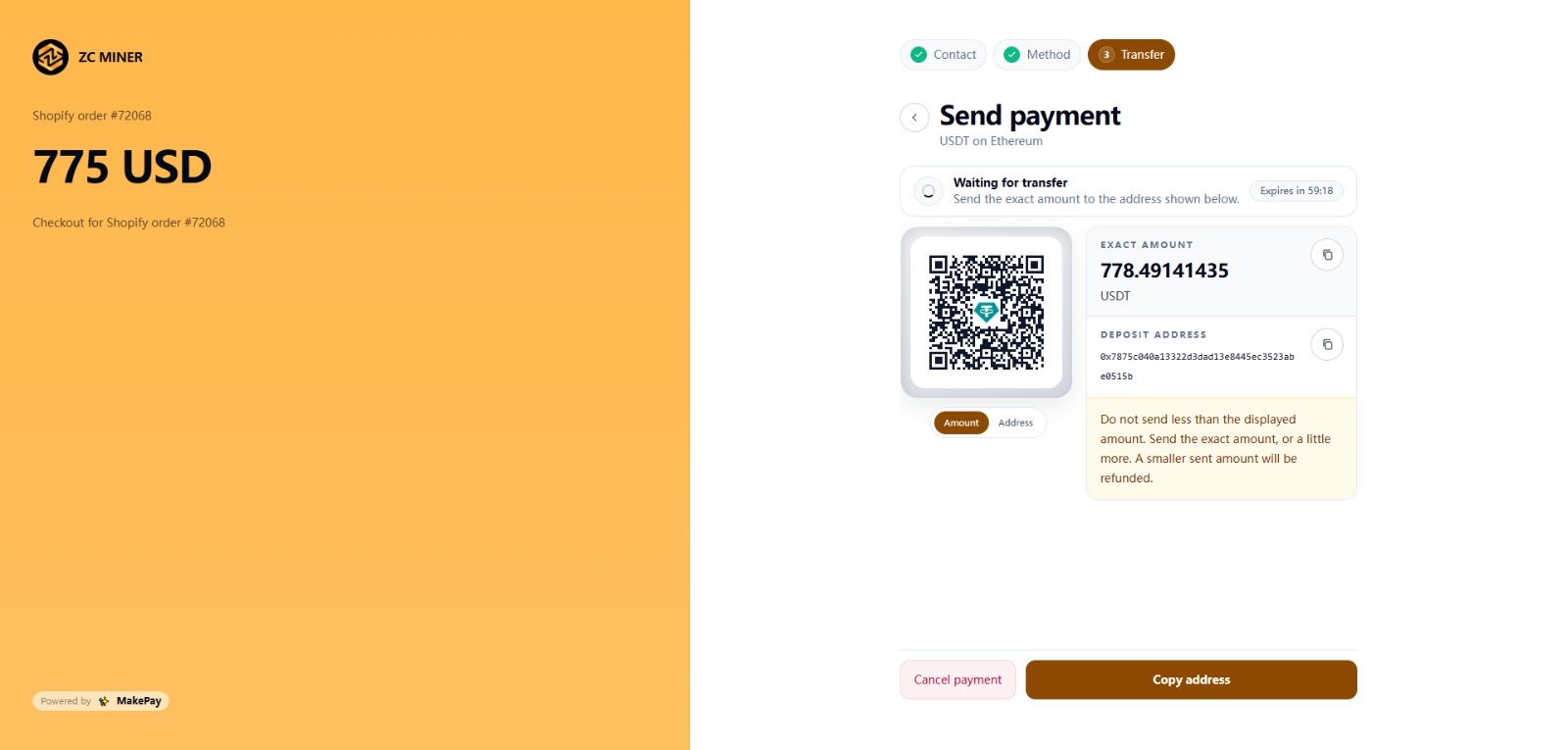
Inside the ZC Miner checkout.
The checkout illustration from MakePay’s published customer story shows the order context beside the payment instructions.
The details that matter.
- An identifiable order
- Give the buyer, sales team, and support team the same reference.
- Explicit asset and network
- Make the transfer instructions specific to the selected payment route.
- A merchant-controlled destination
- Keep settlement connected to the wallet configured by the business.
The product stays the focus. The payment becomes easier to follow.
ZC Miner’s published checkout demonstrates the core pattern: keep the store responsible for the order, use MakePay for payment instructions and tracking, and settle to the merchant wallet. It is a practical model for hardware sellers whose buyers already use crypto.
Story references
Based on the published MakePay ZC Miner story and the supplier’s public information. No measured performance results or customer quotes are claimed. Artwork is an original illustration, not a photograph of the supplier’s products or facilities.
Another business.
Another perspective.
All case studies 
LeedMiner
From the first machine. To a larger operation.
A payment workflow study for LeedMiner’s mix of mining hardware, container solutions, and hosting—where a clear commercial scope comes before checkout.
Explore the story
DCE Miner
Many machines. One coherent order.
A closer look at DCE Miner’s multi-brand catalog and the payment details that connect a technical product selection to the next step in fulfillment.
Explore the story